

There is something deeply moving about watching your baby push up onto their arms for the first time, wobble their way into a sitting position, or take those tentative first steps across the living room floor. These moments are not just adorable milestones worth photographing. They are the visible signs of a remarkable developmental process unfolding in your baby's brain and body every single day. This guide walks you through the full journey of your baby's gross motor development, from the earliest weeks of tummy time through to independent walking, so you feel informed, prepared, and reassured at every stage.
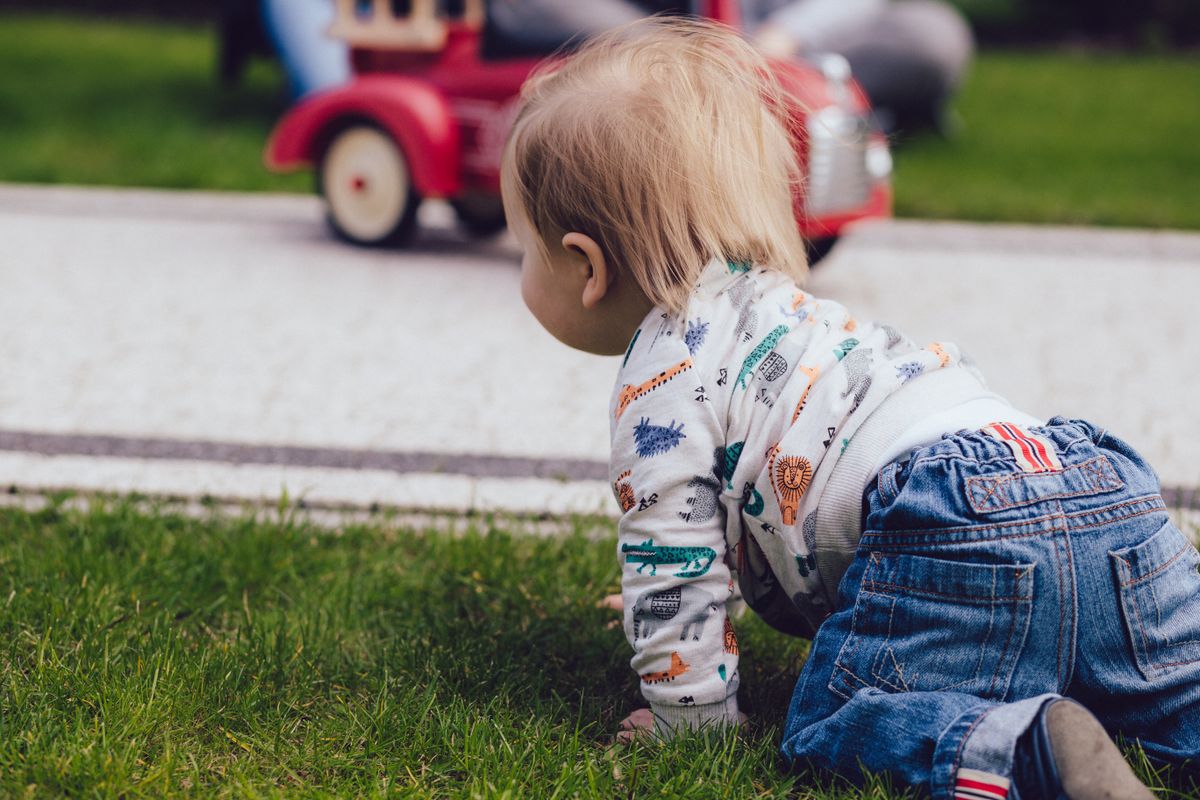
What Are Gross Motor Skills and Why Do They Matter?
Gross motor skills are the large movement abilities that involve the whole body, particularly the muscles of the arms, legs, and core. They include activities such as holding the head up, rolling over, sitting, crawling, standing, and walking. These skills are distinct from fine motor skills, which involve smaller, more precise movements such as picking up a piece of food or turning the pages of a board book.
Gross motor development matters far beyond physical ability. Research consistently shows that strong gross motor foundations support cognitive development, social confidence, and even early academic readiness. When babies spend time on their tummies, reach, roll, and eventually navigate the world on their own terms, they are building neural pathways that will support learning, coordination, and lifelong confidence.
The Foundation: Why Tummy Time Is Essential
Before babies can roll, sit, crawl, or walk, they need to build the foundational strength that makes all of those movements possible. Tummy time is the single most important activity for achieving this, and paediatric health organisations across Europe and beyond recommend starting it from birth.
When a baby lies on their tummy while awake and supervised, they are challenged to lift their head, shift their weight, and eventually push up onto their forearms and then their hands. This engages the neck, shoulder, upper back, and core muscles in a way that no other position can replicate. According to guidelines referenced by paediatric physiotherapists, babies who are not yet mobile should accumulate at least 30 minutes of tummy time spread across the day, with more being beneficial.
Tummy time also offers sensory and cognitive benefits that go beyond muscle building. From their tummies, babies see the world at a different angle, engaging their visual and proprioceptive systems in new ways. Research from the University of Alberta found that babies who received recommended amounts of tummy time reached their gross motor milestones sooner than those who had less floor time.
If your baby protests tummy time at first, this is completely normal. Start with very short sessions, even just one or two minutes at a time, and use a rolled towel under the chest for support, or simply lay your baby tummy down on your chest. A cushioned, stimulating surface can also make a big difference. The HelloLoomi Activity Play Mat with Arches is designed to engage babies during floor time, with hanging toys that encourage them to lift their head and reach.

Gross Motor Milestones Month by Month
Every baby develops at their own pace, and there is a meaningful range of what is considered typical. That said, having a general sense of the timeline helps parents know what to expect and when to celebrate.
0 to 3 Months: Head Control Begins
In the first weeks of life, your baby's movements are largely reflexive. By around two months, most babies begin to lift their head briefly during tummy time and turn it from side to side. By three months, many can lift their head and chest off the surface, propped on their forearms. You will also notice increasingly deliberate arm and leg movements, sometimes kicking with surprising force.
4 to 6 Months: Rolling and Reaching
Rolling is typically the first big gross motor milestone, and it usually emerges between four and six months. Most babies roll from tummy to back first, since that direction requires less strength, and then progress to rolling from back to tummy. By around six months, many babies can sit with some support and begin to bear weight on their legs when held upright. Reaching and batting at objects becomes more purposeful around this time too.
6 to 9 Months: Sitting and Early Mobility
Independent sitting, without needing a caregiver's hands for balance, typically emerges between six and nine months. Once a baby can sit steadily, their hands are freed up for exploration, and this opens up a whole new world of learning. Many babies also begin some form of early mobility during this period, whether rocking on hands and knees, commando crawling on their tummies, or shuffling on their bottoms.
7 to 12 Months: Crawling, Pulling Up, and Cruising
Classic hands and knees crawling typically emerges between seven and ten months, though the range extends to twelve months. Some babies commando crawl first, using their arms to drag themselves along the floor. Others skip traditional crawling entirely and move straight to pulling themselves up to stand. Neither of these variations indicates a developmental problem. The CDC removed crawling from its official milestone checklists in 2022, acknowledging that not all babies crawl and that skipping this stage does not lead to developmental difficulties.
Once babies can pull themselves to stand by holding onto furniture, they often begin cruising, stepping sideways while holding on. This stage is excellent for building leg strength and balance in preparation for independent walking.
Supporting Your Baby's Gross Motor Journey at Home
While gross motor development unfolds naturally, the environment you create at home plays a meaningful supporting role. Plenty of safe floor time is the single most impactful thing you can do. Babies need unrestrictive space to move freely, and time spent in bouncers, car seats, and carriers, while necessary and valuable in their own right, should be balanced with plenty of time on a flat, safe surface.
A quality play gym is a wonderful investment for the floor time years. It gives babies something to look at and reach for during tummy time, and later provides a frame to pull themselves up on as they approach standing. The HelloLoomi Wooden Baby Gym offers a natural, stimulating environment that grows with your baby from the early tummy time weeks through to the pulling to stand stage.

Reducing time in constrictive gear matters too. While carriers, bouncy seats, and pushchairs are practical necessities, babies who spend extended periods in them have less opportunity to strengthen the muscles that support independent movement. Aim to keep structured seat time to what is genuinely needed, and prioritise floor time whenever it is safe and practical.
Talking to your baby, narrating your movements, and getting down on the floor with them also supports their motivation to move. Babies are social beings and are far more likely to make the effort to reach, roll, or crawl when there is a warm, encouraging face to move toward.
When Crawling Looks Different
One of the most common sources of parental concern is when a baby does not crawl in the expected way, or seems to skip it altogether. It is worth knowing that there are multiple recognised styles of getting around on the floor. Commando crawling, where a baby pulls themselves along on their tummy without lifting their body, is entirely normal and more common than many parents realise. Bottom shuffling, where babies sit and propel themselves forward on their bottom, is also a recognised and normal variation.
Research suggests that around seven percent of babies skip crawling entirely and move directly from sitting to pulling up and walking. If your baby is doing this and is otherwise meeting their milestones, there is generally no cause for concern. If you have any doubts, a conversation with your health visitor or paediatric physiotherapist is always a good first step.
First Steps and Independent Walking
Independent walking typically emerges between nine and fifteen months for babies who crawl, and can appear later for babies who bottom shuffle, sometimes not until seventeen or eighteen months. This wide range is considered within normal development. Walking independently requires the simultaneous maturation of muscle strength, balance, spatial awareness, and motor planning, all of which develop at slightly different rates in different children.
The transition to walking is rarely sudden. Most babies go through a period of cruising along furniture, then standing briefly without support, then taking one or two steps between pieces of furniture, before finally walking several steps unaided. Some babies also take their first independent steps and then seem to abandon walking for a week or two, apparently preferring the efficiency of crawling. This is normal and simply reflects the fact that crawling is still faster and more reliable for them at that stage.
When to Seek Advice
While there is a wide and healthy range of what is typical, there are some signs worth discussing with a healthcare provider. According to NHS physiotherapy guidance, you should seek advice if your baby shows no form of independent mobility, including crawling, commando crawling, or bottom shuffling, by around twelve months. You should also speak to your health visitor if your baby is not pulling to stand by thirteen months, not walking independently by eighteen months, or if you notice a significant loss of a skill they had previously achieved.
It is always better to raise a concern early. Most variations in gross motor development turn out to be well within normal range, but when additional support is needed, early physiotherapy makes a meaningful difference.
Conclusion
Your baby's journey from those first wobbly head lifts to triumphant first steps is one of the great privileges of early parenthood. By understanding the stages of gross motor development and providing a supportive, stimulating environment for your baby to move and explore, you are giving them the very best start. At HelloLoomi, we design products with this journey in mind, combining thoughtful functionality with natural materials that support your baby's development and your own confidence as a parent. Explore our full range at HelloLoomi and find the tools that will make your baby's floor time both joyful and purposeful.
Frequently Asked Questions
How much tummy time does my baby need each day?
Paediatric health guidelines recommend at least 30 minutes of tummy time spread across the day for babies who are not yet mobile, with more being beneficial. You do not need to do it all at once. Short sessions of a few minutes, several times a day, are just as effective as longer sessions and are easier for most babies to tolerate, especially in the early weeks.
My baby hates tummy time. What can I do to make it easier?
Many babies resist tummy time at first, particularly in the newborn period. Try placing a small rolled towel under your baby's chest and shoulders to reduce discomfort, or lay them tummy down on your own chest so they can see your face. Getting down on the floor at their level and using engaging toys or a play mat with hanging objects can also make the experience more appealing. The key is to keep sessions short and positive rather than pushing through prolonged protests.
Is it normal for a baby to skip crawling and go straight to walking?
Yes, it is entirely normal. Research estimates that around seven percent of babies skip hands and knees crawling and move directly from sitting or bottom shuffling to pulling up and walking. The CDC removed crawling from its official developmental milestone checklists in 2022, reflecting the understanding that skipping this stage does not indicate a developmental problem as long as the baby is progressing well overall.
When should my baby be walking independently?
Most babies take their first independent steps between nine and fifteen months, with the full range of typical development extending to around eighteen months. Babies who bottom shuffle rather than crawl may walk later, sometimes not until around twenty months, and this is still considered within normal range. If your baby is not walking independently by eighteen months, it is worth discussing this with your health visitor or GP.
What toys or products best support my baby's gross motor development?
For the tummy time and early floor play stage, a padded play mat with hanging toys encourages head lifting and reaching, while a wooden baby gym like the HelloLoomi Wooden Baby Gym provides visual interest and later a frame to pull up on. The most important thing is plenty of safe, unrestrictive floor time on a firm, comfortable surface where your baby can move freely.
What are the signs that my baby might have a gross motor delay?
Signs worth discussing with a healthcare professional include no independent head control by four months, no rolling by six months, no sitting independently by nine months, no form of floor mobility such as crawling, commando crawling, or bottom shuffling by twelve months, and no independent walking by eighteen months. If your baby seems to lose a motor skill they previously had, seek advice promptly as this is always worth investigating.
Does the amount of time my baby spends in a bouncer or pram affect their motor development?
Extended time in bouncers, car seats, and pushchairs does limit the amount of free floor movement a baby can practice, which is important for muscle development. While these products are practical and necessary for daily life, paediatric guidelines emphasise that floor time should be prioritised whenever safe and practical. A useful rule of thumb is that any time your baby is not sleeping, eating, or in transit, floor time is the most developmentally supportive option available.


