

From the very first moments after birth, your baby is searching for one thing above all else: you. The sound of your voice, the warmth of your skin, the steady rhythm of your heartbeat. These sensations are not luxuries for a newborn; they are biological necessities. Babywearing, the practice of carrying your baby in a sling or soft carrier close to your body, is one of the most powerful tools available to any parent who wants to nurture a deep, lasting bond with their child. Backed by decades of psychological research and a growing body of paediatric science, babywearing is recognised not simply as a practical convenience but as a profoundly effective way to support your baby's emotional development from the very start of life.
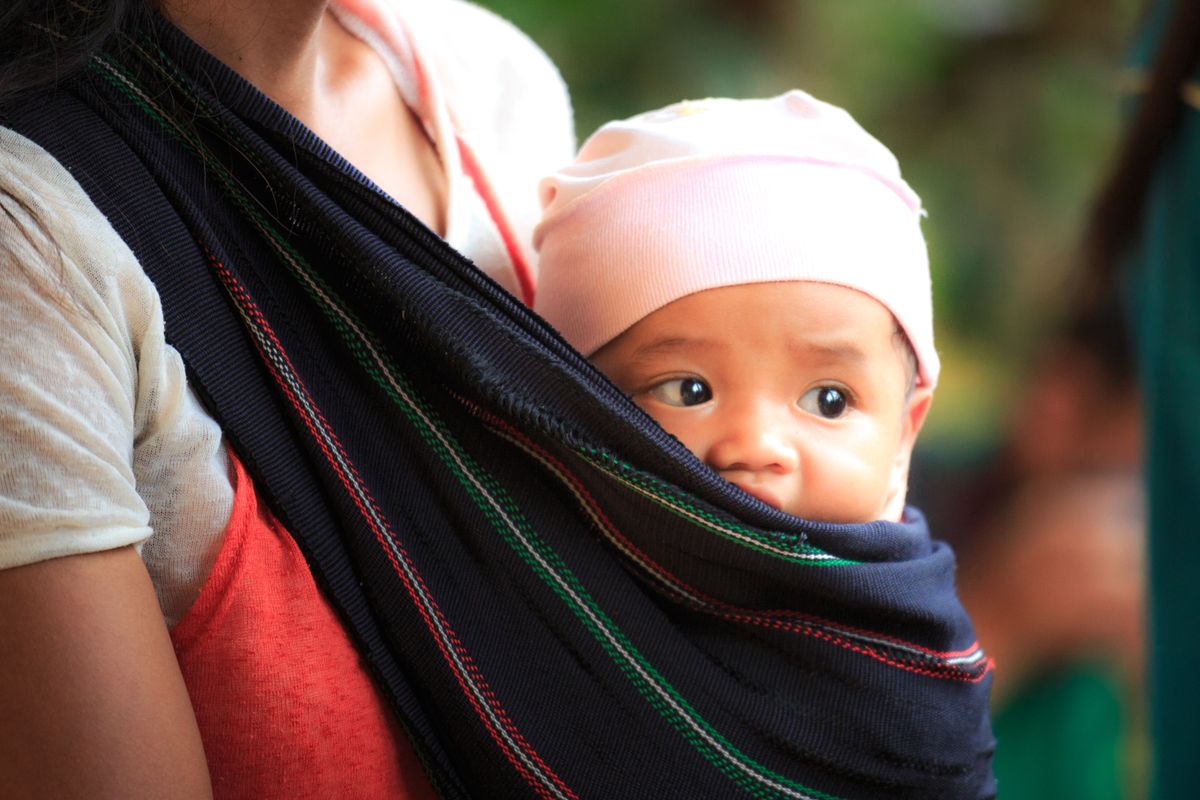
In this post, you will discover what secure attachment actually means, why babywearing is so closely linked to it, how carrying your baby safely benefits their developing brain and nervous system, and what practical steps you can take to get started with confidence, whether your baby is a newborn or a few months old.
What Is Secure Attachment and Why Does It Matter?
Attachment theory was first developed by the British psychiatrist John Bowlby, who proposed that the bond between a baby and their primary caregiver is not simply an emotional nicety but an evolutionary drive as powerful as hunger or thirst. A baby who feels securely attached to their caregiver has a reliable, responsive base from which to explore the world. When something frightens or upsets them, they turn to that trusted person for comfort, and when they receive it consistently, they learn that the world is a safe and predictable place.
American developmental psychologist Mary Ainsworth built on Bowlby's work through a famous observational study known as the Strange Situation. She found that babies whose caregivers responded promptly and sensitively to their signals showed markedly more confident and independent behaviour as they grew. Securely attached children were not made anxious or clingy by the closeness of their early bond. On the contrary, the security of that bond gave them the inner confidence to take risks, form friendships, and handle stress as they moved through childhood and into adolescence.
For parents in the Netherlands, Germany, Belgium, and the Nordic countries, where warm and responsive parenting traditions sit alongside a strong appreciation for scientific evidence, understanding the foundations of secure attachment can be deeply reassuring. The instinct to hold your baby close is not indulgence. It is exactly what your baby needs.
The Research Linking Babywearing and Secure Attachment
Over recent decades, researchers have studied babywearing specifically as a tool for building the attachment bond, and the findings are striking. Studies have found a positive correlation between the number of hours a baby spends in a carrier and the likelihood of that baby developing a secure attachment style. In one important study, infants whose caregivers had received soft baby carriers showed significantly more secure attachment behaviours than those in a control group. Crucially, the research demonstrated that even carrying a fully clothed baby, without direct skin to skin contact, had measurable positive effects on attachment quality.
The reasons for this connection are not difficult to understand. When a baby is worn close to a caregiver's body, they are held in the physical proximity that evolution has prepared them to expect. They hear your heartbeat. They feel the rise and fall of your breathing. They are rocked gently with every step you take. This environment closely resembles the womb, and for a young baby navigating the enormous transition of life outside that protected space, it is profoundly calming.
What Happens in Your Baby's Body When You Carry Them
The physiological effects of being held close are well documented. Skin to skin contact and close physical contact through a carrier both trigger the release of oxytocin, often called the bonding hormone, in both parent and baby. Oxytocin promotes feelings of love, calm, and connection. At the same time, levels of cortisol, the primary stress hormone, drop significantly. Research published in Frontiers in Pediatrics in 2024 confirmed that salivary cortisol levels decrease substantially in babies who receive regular skin to skin contact, including in preterm infants in neonatal intensive care settings.
Carried babies also cry significantly less. A landmark study found that increasing the time parents carried their babies led to a substantial reduction in crying and fussing overall. For parents navigating the exhausting early weeks of a baby's life, this is not a trivial finding. Less crying means more opportunity for calm, connected interaction, which in turn deepens the attachment bond further. Beyond the emotional benefits, close physical contact supports healthy heart rate regulation, steady breathing, and effective temperature management, all conditions under which healthy brain development flourishes.
For the newborn stage especially, a soft and gentle wrap pairs beautifully with our HelloLoomi Baby Swaddle Wrap in Powder Pink, made from breathable cotton muslin to keep your baby snug and settled during those precious carried moments or during a gentle transfer to their sleep space.

Safe Babywearing: The TICKS Guidelines Explained
Before you begin babywearing, it is worth familiarising yourself with the internationally recognised TICKS guidelines, which offer a simple framework for checking that your baby is positioned safely at all times. T stands for Tight: the carrier should be snug with no loose fabric, so your baby is held high and close to your chest without slumping. I stands for In view at all times: you should always be able to see your baby's face simply by glancing down. C stands for Close enough to kiss: your baby's head should be near enough that you can bend your chin and touch the top of it. K stands for Keep the chin off the chest: your baby's airway must remain open, which means their chin should never be pressed down toward their chest. S stands for Supported back: your baby's spine should be gently supported in its natural curved position, with their tummy and chest against yours.
For hip health, look for a carrier that positions your baby in the ergonomic M position: knees higher than the bottom, with the thighs supported from knee to knee and the legs falling gently to the side. This position mirrors the natural resting position of a baby's hip joints and is endorsed by the International Hip Dysplasia Institute as a hip healthy carrying position. Carriers that hold a baby with legs together and pointing straight down are best avoided in the early months.
Pairing safe carrying with the right layers makes a real difference on cooler days. Our HelloLoomi Baby Swaddle with Bear Ears in Grey is a wonderfully gentle option for keeping your newborn cosy during and after carrying sessions. The soft bear ear hood adds warmth for cool Northern European mornings, and the snug swaddle design helps transition a carried baby into a calm and settled sleep.

How Babywearing Sharpens Responsive Parenting
One of the most significant and underappreciated benefits of babywearing is how it sharpens a caregiver's ability to read and respond to their baby's cues. When your baby is worn close to your body, you feel their movements, sense changes in their breathing, and notice subtle shifts in their posture long before a full cry develops. This continuous attunement is at the heart of what developmental psychologists call responsive parenting, and it is one of the strongest predictors of secure attachment.
Babies communicate through movement, facial expression, sound, and physical tension long before they have words. A parent who carries their baby frequently becomes fluent in this preverbal language almost without realising it. They know when their baby is tired, overstimulated, hungry, or simply in need of reassurance. This attentive responsiveness, offered again and again over thousands of small daily interactions, is exactly what builds the neural pathways in a baby's brain associated with emotional regulation, social confidence, and resilience.
Babywearing is not exclusive to birth mothers. Research has found that fathers and partners who carry their babies regularly show increased levels of responsiveness and report stronger feelings of closeness and parenting confidence. In families where both caregivers share the carrying, babies benefit from two securely functioning attachment figures, which research suggests is associated with even stronger developmental outcomes.
Babywearing Through the Seasons in Northern Europe
For families across the Netherlands, Germany, Belgium, Luxembourg, Denmark, Norway, and Sweden, babywearing offers a particular practical advantage: it is beautifully suited to the Northern European climate. A baby carried in a snug wrap stays effortlessly warm against a parent's body as you move through cool autumn mornings or crisp spring days. The natural body heat of a caregiver provides steady, gentle warmth that complements any outing beautifully.
On colder days, layering your carried or resting baby with a high quality natural fibre covering adds real comfort. Our HelloLoomi Merino Wool Baby Blanket in the HAPPINESS design is crafted from naturally temperature-regulating merino wool that is gentle on a baby's delicate skin. Draped around a freshly settled baby after a carrying session, it provides the kind of soft, natural warmth that perfectly complements the closeness of babywearing.

Start Simple and Trust the Process
If you are new to babywearing, the most important thing to know is that you do not need expensive equipment or hours of preparation. Many parents begin with a simple stretch wrap or a soft structured carrier and find that confidence comes quickly with a little practice. Local babywearing groups and consultants exist across Northern Europe and can offer hands-on guidance if you would like personalised support before getting started.
What matters most is not the specific type of carrier you use but the quality of presence you bring to those carried moments. Talk to your baby as you walk. Sing softly. Narrate what you see around you. This continuous stream of connection and spoken language is nourishing for your baby's developing brain and deepens the attachment bond with every step you take together.
At HelloLoomi, we believe that the simplest moments of closeness are often the ones that matter most. From the very first days of your baby's life, the act of holding them near and responding to their needs with warmth and consistency is laying the foundation for a lifetime of trust, security, and love. Explore our collection of thoughtfully chosen baby essentials to support every carried moment, every cuddle, and every quiet connection.
Frequently Asked Questions
Does babywearing actually help with secure attachment or is it just a parenting trend?
Babywearing has strong scientific backing as a tool for promoting secure attachment. Multiple studies have found a positive correlation between time spent in a carrier and secure attachment outcomes in infants. The practice aligns closely with the principles of attachment theory developed by John Bowlby and Mary Ainsworth, which are among the most robustly evidenced frameworks in developmental psychology, and research confirms measurable benefits for both infant and caregiver wellbeing.
How many hours a day should I carry my baby to support bonding?
There is no single prescribed number, but research suggests that even moderate amounts of babywearing have measurable positive effects on attachment and infant wellbeing. Many families find that one to three hours of carrying per day, spread naturally across feeding, settling, and daily activities, provides significant benefit. The most important factor is consistency and responsiveness rather than reaching a specific time target each day.
Is babywearing safe for newborns?
Yes, babywearing is safe for newborns when done correctly using the TICKS guidelines. Ensure the carrier is tight, your baby is in view at all times, close enough to kiss, with their chin kept away from their chest and their back supported in its natural curve. Choose an ergonomic carrier that supports the M position for hip health, with knees higher than the bottom and thighs supported from knee to knee. Always transfer a sleeping baby to a flat sleep surface when it is safe and practical to do so.
Will babywearing make my baby too clingy or dependent on being held?
Research consistently shows the opposite effect. Babies who receive prompt and responsive care in their early months, including through babywearing, develop greater independence and emotional resilience over time. Secure attachment gives children the inner confidence to explore and separate from their caregivers because they trust that their needs will be met. Responding generously to a baby's need for closeness does not create unhealthy dependency; it builds the foundation for genuine independence.
Can my partner use babywearing to bond with our baby?
Absolutely, and the research actively supports this. Studies have found that fathers and secondary caregivers who carry their babies regularly show increased responsiveness and report stronger feelings of closeness and parenting confidence. A baby can develop secure attachment with multiple caregivers, and a partner who wears the baby regularly becomes a trusted attachment figure in their own right. Sharing the carrying between parents also provides important rest time for each caregiver throughout the day.
What should I wrap my baby in after a babywearing session to keep them warm?
After a carrying session, especially in the cooler Northern European climate, a soft natural fibre blanket is ideal for keeping your settled baby comfortable without overheating. Merino wool is particularly well suited to babies as it regulates temperature naturally, wicking moisture and maintaining warmth in a gentle and breathable way. The HelloLoomi Merino Wool Baby Blanket is a thoughtfully crafted option made from merino wool that is gentle enough for a newborn's delicate skin.


