

There is something wonderfully satisfying about watching a small baby reach out and pick up a single piece of food from the tray of their highchair. What looks like a simple, ordinary moment is actually the result of months of careful neurological and muscular development. The ability to bring the tip of the thumb and the index finger together to pick up a tiny object is called the pincer grasp, and it is one of the most important fine motor milestones your baby will reach in their first year of life. In this guide, we will walk you through everything you need to know about the pincer grasp: when it typically develops, how to encourage it through everyday play and feeding, and when it might be worth speaking to your child's doctor or health visitor.
What Is the Pincer Grasp?
The pincer grasp is a fine motor skill describing the coordinated movement of the thumb and index finger to pick up small objects with precision. You may have heard the term in the context of baby led weaning or developmental check-ups, but its significance stretches far beyond mealtimes. This type of controlled, precise grip forms the foundation for many of the skills your child will rely on throughout early childhood and beyond, including writing, drawing, fastening buttons, and using cutlery confidently.
Before babies develop the pincer grasp, they rely on a much broader and less refined grip. Young infants use what is called a palmar grasp, scooping objects into the whole hand and holding them against the palm. The journey from this whole hand grip to the refined pincer grasp is a gradual process that unfolds over many months, and it is closely tied to the development of the brain, muscles, and vision working together in a beautifully coordinated way.
When Does the Pincer Grasp Develop?
Most parents begin to notice the very first signs of pincer grasp development somewhere between six and ten months of age, though the skill continues to refine well into the second year. Every baby follows their own unique developmental timeline, and a few weeks of variation in either direction is entirely normal and expected.
Around six months, many babies begin using what is known as a raking grasp. Rather than picking up an object with precision, they use their fingers in a raking motion, drawing small items toward the palm. This is an important precursor to the pincer grasp and shows that your baby is beginning to develop the hand and eye coordination that more refined grasping will eventually require.
Between eight and ten months, you will likely notice a meaningful shift. Your baby may start to bring the pads of their thumb and index finger together to pick up objects, using the lower portions of the finger rather than the very tips. Paediatric occupational therapists describe this as an immature or inferior pincer grasp. While less refined than the mature version, it is a huge developmental achievement and a clear sign that the brain and hand are learning to work together with much greater precision.
By around eleven to twelve months, most babies develop what is called the superior or mature pincer grasp, using the very tips of the thumb and index finger to pick up small objects with real accuracy. This is the fully developed form of the skill, and reaching this milestone is a significant moment worth celebrating in your child's first year.
From Raking to Reaching: How the Grasp Evolves
Understanding the stages of pincer grasp development can help you appreciate the remarkable progress your baby is making, even when it does not look very dramatic from the outside. The shift from a raking movement at six months to a precise fingertip grip at twelve months represents enormous growth in the nervous system, the small muscles of the hand and fingers, and the visual processing systems that guide the hand toward its target.
One way to think about this development is to imagine the grip gradually narrowing and becoming more accurate over time. At first the whole hand is involved, then fewer fingers, then just two, and finally the very tips of those two fingers. Each stage builds on the last, and the progression is driven by a combination of physical maturation and the opportunities your baby gets to practice and explore with their hands every single day.
Why the Pincer Grasp Matters Beyond the Highchair
Parents often first become aware of the pincer grasp in the context of mealtimes, particularly when introducing finger foods or starting baby led weaning. And while the connection to feeding is real and important, the pincer grasp is relevant to far more than food. This foundational fine motor skill will eventually enable your child to hold a crayon and make their first marks on paper, to manipulate puzzle pieces and threading beads, to do up a coat and tie a shoelace, and ultimately to write with a pencil when they start school.
Fine motor development is also closely linked to cognitive development. When a baby concentrates intently on picking up a small object, they are not only training their fingers but also developing their focus, their problem solving abilities, and their understanding of cause and effect. Every small success, such as finally managing to pick up a piece of banana or a small wooden block, builds a baby's confidence as well as their physical skills. These tiny moments of mastery matter more than they might seem.
How to Support Your Baby's Fine Motor Development at Home
The good news is that encouraging the pincer grasp does not require any special equipment or elaborate activities. The most effective thing you can do is create rich, varied opportunities for your baby to use their hands throughout the day, both during play and at mealtimes.
Offering finger foods during mealtimes is one of the most natural ways to encourage the pincer grasp. Small, soft pieces of ripe banana, steamed carrot, avocado, or well cooked pasta give babies a motivating reason to practice picking up small objects. Placing pieces on a plate or tray rather than offering them directly into the hand encourages your baby to reach, grasp, and bring food to their mouth independently, building both fine motor skills and a positive relationship with food at the same time.
Play environments that offer a variety of textures, shapes, and sizes are enormously valuable. Busy boards, which feature buttons, latches, and other interactive elements, give babies and young toddlers a wonderful way to practice fine motor skills in an engaging, exploration based way. The HelloLoomi Portable Baby Sensory Busy Board is designed with exactly this kind of hands on exploration in mind, providing babies with a rich variety of tactile experiences that naturally encourage finger strength and dexterity.

Activity trees that encourage babies to track a moving ball as it rolls and drops are another excellent choice for developing the hand and eye coordination that underpins precise grasping. The HelloLoomi Montessori 4in1 Ball Track Activity Tree invites babies to hold, drop, and follow balls through four different levels of activity, supporting visual tracking and the beginnings of intentional manipulation with the fingers.

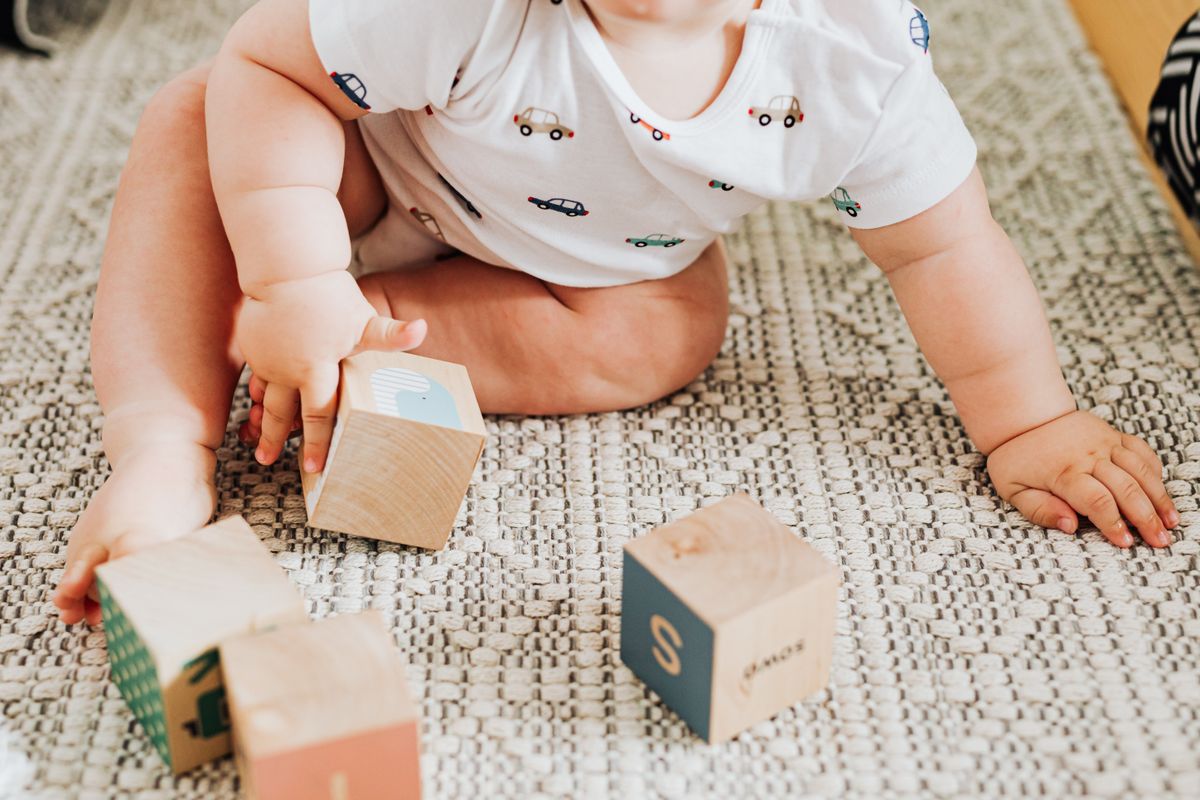
Simple wooden blocks offer something timeless and deeply effective for fine motor development. The act of picking up a block, examining it, transferring it from hand to hand, and attempting to stack it requires the kind of coordinated grip and release that directly supports pincer grasp development. The HelloLoomi Wooden Blocks in a Bag provide 100 natural wooden pieces in a variety of shapes, giving babies and toddlers endless opportunities to grasp, build, sort, and explore at whatever pace suits them.

You can also encourage the pincer grasp through simple daily activities you may already be doing. Pointing at pictures in a board book exercises the isolation of the index finger, which is essential for the pincer grasp. Peeling stickers from a sheet and placing them on paper is a motivating and surprisingly effective activity. Turning the pages of a book, pulling a tissue from a box, or even playing with a ball of soft dough all engage the small muscles of the hand and fingers in beneficial ways.
Tummy Time and Its Role in Fine Motor Development
Many parents are surprised to learn that tummy time plays an important role in fine motor development, and not just in the development of gross motor skills like rolling and crawling. When babies spend time on their tummies, they build strength in the core, the neck, the shoulders, and the arms. This foundational strength is what eventually allows babies to sit upright with stability and reach confidently outward with their hands.
Research shows that babies who have regular tummy time during the first months of life tend to develop the physical stability that supports fine motor exploration. If your baby is not yet a fan of tummy time, try placing a rolled towel under their chest for gentle support, lying down face to face with them, or placing a small mirror or an interesting toy just in front of them to give them something engaging to look at and reach toward.
Crawling, which typically emerges after regular tummy time practice, is particularly beneficial for fine motor development. The act of bearing weight through the hands and wrists, and the rhythmic movement of crawling across the floor, builds the strength and neural connections that the fingers need for precise grasping. This is one reason why paediatric occupational therapists often encourage plenty of floor play on all fours before babies transition to walking.
The Pincer Grasp and Starting Solids
If you are planning to try baby led weaning or are already introducing your baby to solid foods, you may have heard that the pincer grasp is a key readiness signal. It is worth clarifying that a fully developed pincer grasp is not actually required before starting solids. Most babies begin solid foods around six months of age, well before the pincer grasp has emerged. At this stage, they manage larger pieces of food cut into the shape of a finger or a strip, gripping them with the whole hand and bringing them confidently to their mouth.
As the pincer grasp develops over the following months, you can gradually offer smaller pieces of soft food and watch your baby's ability to feed themselves grow alongside their fine motor skills. Mealtimes become a built in opportunity for fine motor practice, and babies get immediate and motivating feedback for their efforts at every meal.
When to Speak to a Health Professional
Most babies develop the pincer grasp on their own schedule and without any intervention. However, there are some situations where it is worth speaking to your child's doctor, health visitor, or a paediatric occupational therapist. If your baby is not showing any attempts to pick up objects with their thumb and index finger by twelve months, or if you notice that one hand seems significantly more developed than the other, it is worth raising this at your next check-up.
It is also worth bearing in mind that premature babies often develop on a slightly later timeline than babies born at full term. Their developmental milestones are typically assessed using their corrected age, calculated from their original due date rather than their birth date. A baby born several weeks early may therefore develop the pincer grasp several weeks later than a full term baby of the same chronological age, and this is entirely normal.
A paediatric occupational therapist can provide a thorough assessment and, if needed, suggest tailored activities to support your baby's fine motor development. Early support, when it is needed, is always more effective than waiting, so trust your instincts and do not hesitate to reach out if something does not feel right.
A Note from HelloLoomi
Watching your baby develop the pincer grasp is one of those quiet milestones that can feel almost magical when you stop to appreciate what is happening beneath the surface. Months of neurological growth, muscle strengthening, and hands on exploration come together in the moment when your baby successfully picks up a tiny piece of food or a small block between their thumb and finger for the very first time. By creating a rich play environment, offering regular tummy time, and weaving fine motor practice into everyday moments like mealtimes and book reading, you are giving your baby exactly what they need to thrive. At HelloLoomi, we design products with early development in mind, and we would love to help you find the perfect toys and tools to support your baby's growing curiosity and motor skills.
Frequently Asked Questions
When does a baby develop the pincer grasp?
Most babies begin to show the earliest signs of the pincer grasp between eight and ten months, when they start to pick up objects using the pads of the thumb and index finger. The mature pincer grasp, using the very fingertips with precision, typically develops between eleven and twelve months. Every baby follows their own timeline, and a few weeks of variation in either direction is perfectly normal.
How can I help my baby develop their pincer grasp?
You can encourage the pincer grasp by offering plenty of hands on play with objects of different shapes and sizes, providing finger foods at mealtimes, doing regular tummy time to build shoulder and core strength, and choosing toys like busy boards, wooden blocks, and activity trees that naturally invite precise finger use. Simple daily activities such as pointing at pictures in books or turning pages also strengthen the muscles needed for a refined pincer grasp.
Is the pincer grasp required before starting solid foods?
No. Babies can safely begin solid foods around six months of age, before the pincer grasp has developed. At this stage, they grip larger pieces of food with the whole hand. As the pincer grasp develops between eight and twelve months, babies become increasingly able to pick up smaller pieces of soft food and feed themselves more independently.
What if my baby is not showing a pincer grasp by twelve months?
If your baby is not yet attempting to pick up small objects with their thumb and index finger by twelve months, it is a good idea to mention this at their next check-up with your health visitor or doctor. A paediatric occupational therapist can assess your baby's fine motor development and suggest targeted activities or early support if needed. Premature babies are assessed using their corrected age, so their timeline may naturally look a little different from full term peers.
What toys are best for developing the pincer grasp?
Toys that encourage precise finger use are the most effective for supporting pincer grasp development. Busy boards with buttons and latches, natural wooden blocks in varied shapes, and ball track activity trees are all excellent choices. The HelloLoomi sensory busy board, wooden blocks collection, and Montessori 4in1 ball track activity tree are all designed to support fine motor exploration in a developmentally appropriate and engaging way.
Does tummy time really help with fine motor development?
Yes. Regular tummy time builds the core, shoulder, and arm strength that babies need to sit upright with stability and reach confidently with their hands. This physical foundation is closely connected to the development of fine motor skills including the pincer grasp. Research consistently links regular tummy time to earlier achievement of motor milestones, making it one of the most valuable daily practices for young babies.
Can a delayed pincer grasp be a sign of something else?
In some cases, a delay in fine motor development, including the pincer grasp, may be associated with conditions such as developmental coordination disorder, vision difficulties, or other developmental differences. If you have concerns about your baby's fine motor development, speak to your health visitor or GP. An early referral to a paediatric occupational therapist means that if support is needed, it can begin promptly and be most effective.


